Tuesday, 13 March 2012


Tuesday, 14 February 2012
Monday, 13 February 2012
New Drug Driving Offence Looming?
The British Medical Journal (BMJ) has published a report that suggests People who get behind the wheel within a few hours of smoking marijuana may
be almost twice as likely to cause an accident as those who are
drug-free.

According to the report, 18 percent of drivers causing road deaths have traces of illegal drugs including cannabis in their system. At present, the offence of driving whilst unfit requires the prosecution to prove that the drugs (which can be legal and illegal substances) taken by the driver have caused him to be "impaired".
Mike Penning, Road Safety Minister, has confirmed the Government is intending to introduce a new drug-driving offence and recently announced a panel of experts who will advise on the technicalities of introducing the new offence, including whether it is possible to set limits similar to the drink-drive limit. Drug screening devices are also being introduced into police stations around the country.
Jeanette Miller, Senior partner of specialist motoring law firm and aka "Miss Justice" said of the proposals:
"In addition to analysing a defendant's blood for traces of drugs, a number of tests must be conducted by the Police in these cases, which means that it is rare for us to lose a case involving a drug driving allegation.I understand why the Government would wish to change the law to prevent this but am not convinced that a drug-drive limit is the answer."
A recent survey by road safety charity Brake and insurer Direct Line revealed that one in nine young drivers (11 percent) admitted to driving while on illegal drugs. Julie Townsend, Brake Deputy Chief Executive, said: “Tackling drug driving should be a top priority. This report highlights the danger posed by drivers who have smoked cannabis and adds weight to Brake’s calls for widespread testing and prosecution of drivers who selfishly risk lives by taking illegal drugs and driving."
Friday, 13 January 2012
Being Victim of Insurance Fraud May Be No Defence
Written by George Matthews and Jeanette Miller
There has been recent press coverage of a potentially
enormous insurance fraud . Hundreds of drivers took out policies with the sham company and are only now discovering that the fraudulent insurance company, Aston Midshires, was not in fact and insurance company at all. They were targeting young drivers
in particular who often struggle to secure affordable insurance. A major investigation is now underway by the police,
Trading Standards and the Financial Services Authority.

So, what of the people who have taken out insurance policies
with Aston Midshires? Sadly, the insurance cover is not valid, and people
who have innocently, and in good faith, paid for their cover, are committing the offence of driving without insurance every time they drive. The penalty for driving without insurance
is 6 to 8 penalty points or a discretionary disqualification and a fine of up
to £5,000. If you have taken out a policy with Aston Midshires, then you
should not continue to drive until you have taken out a new insurance policy with
an authorised insurer.
A defence is available to charges of driving without
insurance where restrictions on a policy can be argued to be unlawful and in only one other special situation, namely, if an employee uses an
employer’s vehicle believing they were insured but the employer has failed to
ensure that the employee was insured. In this case the defendant must
prove on the balance of probabilities (in other words more likely than not)
that the vehicle did not belong to him and was not in his possession under a
contact of hire or a loan and that he was using the vehicle in the course of
his employment. In addition, he must also show that he did not know or
have reason to believe that there was no insurance in place for that vehicle.
Although it is unlikely to be considered a defence in the case of a fraudulent
insurance policy, it is possible to run what is called a ‘special reasons’
argument. There are 4 conditions which must be satisfied for a special
reason to be found:
- The reason must be
mitigating or extenuating circumstance;
- It must not amount to a
defence;
- It must be directly
connected to the commission of the offence, and
- The reason must be one
that the court ought properly take into account when imposing punishment.
So what happens if I have had an accident and I had taken
out insurance with Aston Midshires? The Motor Insurers' Bureau (MIB) was
established in 1946 as a private company limited by guarantee for the purposes
of entering into agreements with the government to compensate the victims of
negligence, uninsured and untraced motorists. If you face a claim for
compensation arising out of an accident that was your fault, the MIB will
almost certainly agree to compensate the victim and seek reimbursement of any
compensation paid from you if you are able to afford reimbursement.
If you are presented with a claim for compensation for
injuries or damage arising from an accident when you were not insured, it is
extremely important that you tell your opponent that you were not
insured. Whilst you may be prepared to pay compensation towards the
victim, the MIB will have the legal aspects of the claim free of charge and
minimise the level of compensation payable. For more information about
the MIB please visit their website www.mib.org.uk.
If you are a victim of this outrageous fraud and you face a charge of driving without insurance, or
if you currently have a policy with Aston Midshires and don’t know what to do
next, call us on our freephone number on 08000 85 27 84 for some free initial
advice.
Saturday, 7 January 2012
S-Z of motoring law
S is for Special reasons
The punishments/sentences for motoring offences ranges from prison to mandatory disqualifications, penalty points and fines.
However, if the offence occurred due to a special reason, the Court have the discretion not to award the guideline penalty. A ‘special reason’ is a reason given to the Court as to why the offence was committed. This can include spiked or laced drinks in a drink driving offence, driving a very short distance, driving in an emergency and being misled in an insurance matter.
If a special reason is presented to the court and Magistrates accept your evidence, they can choose to depart from the mandatory minimum penalty for the offence and in some circumstances, whilst you could be found guilty of an offence, you could avoid penalty altogether.
T is for Totting up
When a person receives 12 or more penalty points on their driving licence they will faced with being penalised pursuant to the ‘totting up’ provisions. These direct the Magistrates to impose a 6 month driving ban. In some circumstances (where you have been banned for 56 days of more in the previous 3 years) you could face a longer ban of 1 year.
Although the Magistrates are guided to disqualify a person with 12 penalty points at Geoffrey Miller Solicitors we have achieved enormous success in retaining the licences of thousands of our clients by putting forward arguments of exceptional hardship.
The Magistrates should take into account an individual’s personal circumstances and the effect the disqualification will have upon them and innocent third parties. If the ban would have a serious detrimental effect upon the individual such as losing their job or losing their home or if it would have a devastating effect upon another person such as a dependant, the Court have the discretion not to impose the 6 month ban. In these circumstances they can either impose no ban which means that the individual will continue to have 12 points on their licence until some of the points expire.
In some circumstances the court will refuse to allow a totting up defendant to escape a ban completely and they may impose a shorter ban under the totting up provisions. If this is the case the driver will be required to serve the ban but at the end of it their licence will be wiped clean of penalty points. Whilst no driver wants to receive a ban, this can be a great way of limiting the damage where your points are fairly recent.
Alternatively, the Magistrates can also impose a shorter ban for the substantive offence. in this situation the individual will be required to serve the ban but at the end of it their licence will be returned with all previous penalty points still shown on it. This is often a good outcome for those driving for a living as it is effectively achieving an "extra life" in case of any more offences in the future whilst your licence still has points on it.
U is for driving whilst UNFIT through drink or drugs
Anyone proved to be driving or attempting to drive whilst unfit through drink or drugs commits a criminal offence which is dealt with in a magistrates' court. The arrest procedure is similar to when arrested for drink driving. However, when suspected of being unfit through drugs, a blood sample or urine sample can be required from you as breath test machines are unable to detect drug consumption.
In addition to proving that you were intoxicated by alcohol or drugs, the police will also have to prove that your driving was impaired and can rely on both forensic evidence of samples provided by you and the standard of your driving - such as erratic motoring manouvres.
The maximum sentence is six months in prison. There is a minimum driving ban of 12 months.
V is for V5 Registration Document
 A V5 is the document issued by the DVLA (Driver and Vehicle Licensing Authority) to the keeper of a motor vehicle. It contains all of the information held by the DVLA about that vehicle. It is very important that the keeper of the vehicle makes sure that the records are correct and up-to-date by providing details of changes of address and by sending the relevant part of the V5 to DVLA when the vehicle is sold, scrapped or transferred to somebody else. The V5 used to be known as the Log Book.
W – is for WHEELS
Wheels are vital for all motor vehicles. Wheels have tyres on them and all tyres must have sufficient tread. Cars, light vans and light trailers MUST have a tread depth of at least 1.6 mm across the central three-quarters of the breadth of the tread and around the entire circumference. You can be given three points on your licence and a fine for not having enough tread. That is PER TYRE. So four bald tyres = 4x3 points = 12 points = a potential driving ban as a totter.
X – is for XYLOPHONE
There is no specific law preventing you from driving whilst playing a xylophone. However were you to be caught driving whilst playing a xylophone you could be prosecuted for driving without due care and attention or dangerous driving. We strongly suggest that you do not drive whilst playing your xylophone. If you feel the urge then you should pull over in a safe place.
Y is for YOUNG drivers
Young people are allowed to start driving or learning to drive most cars on their 17th birthday. 16 year olds can drive a mowing machine, a pedestrian controlled vehicle or a moped with an engine size of up to 50 cc and a maximum speed of up to 50 km/h. You have to wait until you are 21 to drive most larger vehicles. The rules are quite complicated. Check your driving licence or the DVLA website.
Z is for ZIZ ZAG lines
Zig-zag lines are painted on the road at pedestrian crossings and outside schools. You must not park on the zig-zag lines doing so is dangerous will land you with 3 penalty points and a fine.

The punishments/sentences for motoring offences ranges from prison to mandatory disqualifications, penalty points and fines.
However, if the offence occurred due to a special reason, the Court have the discretion not to award the guideline penalty. A ‘special reason’ is a reason given to the Court as to why the offence was committed. This can include spiked or laced drinks in a drink driving offence, driving a very short distance, driving in an emergency and being misled in an insurance matter.
If a special reason is presented to the court and Magistrates accept your evidence, they can choose to depart from the mandatory minimum penalty for the offence and in some circumstances, whilst you could be found guilty of an offence, you could avoid penalty altogether.
T is for Totting up
When a person receives 12 or more penalty points on their driving licence they will faced with being penalised pursuant to the ‘totting up’ provisions. These direct the Magistrates to impose a 6 month driving ban. In some circumstances (where you have been banned for 56 days of more in the previous 3 years) you could face a longer ban of 1 year.
Although the Magistrates are guided to disqualify a person with 12 penalty points at Geoffrey Miller Solicitors we have achieved enormous success in retaining the licences of thousands of our clients by putting forward arguments of exceptional hardship.
The Magistrates should take into account an individual’s personal circumstances and the effect the disqualification will have upon them and innocent third parties. If the ban would have a serious detrimental effect upon the individual such as losing their job or losing their home or if it would have a devastating effect upon another person such as a dependant, the Court have the discretion not to impose the 6 month ban. In these circumstances they can either impose no ban which means that the individual will continue to have 12 points on their licence until some of the points expire.
In some circumstances the court will refuse to allow a totting up defendant to escape a ban completely and they may impose a shorter ban under the totting up provisions. If this is the case the driver will be required to serve the ban but at the end of it their licence will be wiped clean of penalty points. Whilst no driver wants to receive a ban, this can be a great way of limiting the damage where your points are fairly recent.
Alternatively, the Magistrates can also impose a shorter ban for the substantive offence. in this situation the individual will be required to serve the ban but at the end of it their licence will be returned with all previous penalty points still shown on it. This is often a good outcome for those driving for a living as it is effectively achieving an "extra life" in case of any more offences in the future whilst your licence still has points on it.
U is for driving whilst UNFIT through drink or drugs
Anyone proved to be driving or attempting to drive whilst unfit through drink or drugs commits a criminal offence which is dealt with in a magistrates' court. The arrest procedure is similar to when arrested for drink driving. However, when suspected of being unfit through drugs, a blood sample or urine sample can be required from you as breath test machines are unable to detect drug consumption.
In addition to proving that you were intoxicated by alcohol or drugs, the police will also have to prove that your driving was impaired and can rely on both forensic evidence of samples provided by you and the standard of your driving - such as erratic motoring manouvres.
The maximum sentence is six months in prison. There is a minimum driving ban of 12 months.
V is for V5 Registration Document
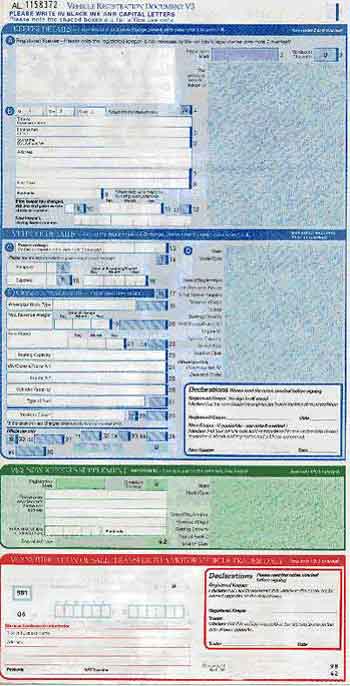 A V5 is the document issued by the DVLA (Driver and Vehicle Licensing Authority) to the keeper of a motor vehicle. It contains all of the information held by the DVLA about that vehicle. It is very important that the keeper of the vehicle makes sure that the records are correct and up-to-date by providing details of changes of address and by sending the relevant part of the V5 to DVLA when the vehicle is sold, scrapped or transferred to somebody else. The V5 used to be known as the Log Book.
W – is for WHEELS
Wheels are vital for all motor vehicles. Wheels have tyres on them and all tyres must have sufficient tread. Cars, light vans and light trailers MUST have a tread depth of at least 1.6 mm across the central three-quarters of the breadth of the tread and around the entire circumference. You can be given three points on your licence and a fine for not having enough tread. That is PER TYRE. So four bald tyres = 4x3 points = 12 points = a potential driving ban as a totter.
X – is for XYLOPHONE
There is no specific law preventing you from driving whilst playing a xylophone. However were you to be caught driving whilst playing a xylophone you could be prosecuted for driving without due care and attention or dangerous driving. We strongly suggest that you do not drive whilst playing your xylophone. If you feel the urge then you should pull over in a safe place.
Y is for YOUNG drivers
Young people are allowed to start driving or learning to drive most cars on their 17th birthday. 16 year olds can drive a mowing machine, a pedestrian controlled vehicle or a moped with an engine size of up to 50 cc and a maximum speed of up to 50 km/h. You have to wait until you are 21 to drive most larger vehicles. The rules are quite complicated. Check your driving licence or the DVLA website.
Z is for ZIZ ZAG lines
Zig-zag lines are painted on the road at pedestrian crossings and outside schools. You must not park on the zig-zag lines doing so is dangerous will land you with 3 penalty points and a fine.

M-R of Motoring law
M is for Mobile phone offences
It is an offence to use a mobile phone whilst driving. Many people mistakenly believe that they must be physically engaged in a conversation, with the phone to their ear before they will be charged with an offence. In some circumstances you can even be charged if you are merely holding the phone in your hand, such as if you were reading a text message. The general rule is "if in doubt, don’t get it out!"
The law does not just extend to mobile phones but also to certain sat nav devices, ipads and laptops. Basically any device where there is an element of interactive communication (internet, satellite or telephone communication.) If you have to touch buttons to operate the device, this is likely to be considered committing the offence. Many people get caught with the mobile phone offence, even when they were operating their phones whilst driving with earphones. Earphones will be insufficient as a lawful hands free device as you still have to touch buttons to take and make calls etc.
There are not many defences to the mobile phone offence, other than when you were genuinely not using your phone in which case, phone records are an essential aspect of the evidence we will gather in support of your defence.
N is for No Insurance
A harsh offence carrying a penalty of between 6-8 penalty points can often be committed as a result of disorganisation, rather than a deliberate attempt to avoid paying for insurance. Failing to renew insurance or changing your bank and forgetting to inform the bank who is taking direct debits will not wash with the courts as a defence.
As from 2011 it is also an offence to allow a vehicle to be parked on a road without insurance, so even if the car is not in use it is expected to be insured.
O is for Police Obstruction
If the police signal to you to pull over and you do not stop for them, this is unlikely to be considered to be police obstruction but it is possible that you will face charge for failing to stop when required by a constable. If driving a mechanically propelled vehicle (a car, lorry etc) you face a fine equivalent to 100% of your weekly take home pay up to a maximum £5,000. The maximum fine for cycles is 100% of weekly take home pay up to £1,000.
If the police have to chase you to stop, however, this could be seen in a very dim light but the courts and may even result in prosecution for more serious offences such as dangerous driving.
P is for PACE, The Police And Criminal Evidence Act 1984
The police have a wide range of powers that they use as part of their day to day work to prevent crime and protect the public. The police’s powers are set out in the Police and Criminal Evidence Act 1984 (which is commonly referred to as PACE). PACE was implemented in order to balance the powers of the police with the rights and freedoms of the general public. The current PACE codes of practice set out police powers, such as a person’s rights and entitlements whilst in police custody and conducting a stop and search. For more information of the safeguards surrounding detention, arrest, interviews and stop and search etc.
A significant breach of these codes can result in crucial evidence in a case being ruled as inadmissible or even a prosecution being considered so flawed that the court dismisses the case.
Q stands for Queries/Questions
If you have any questions about a motoring offence or you require advice and assistance, do not hesitate to contact Geoffrey Miller Solicitors for free specialist advice. Our freephone telephone number is 08000 85 27 84 and our phones are manned every day and night (including bank holidays and weekends) by members of the Geoffrey Miller team (not a call centre).
R stands for Roadside Breath Test
The police have the power to stop anyone at any time – they don’t need to give you a reason – and failing to stop is a criminal offence as explained above.
When pulled over by the police, you may be asked to produce documents including:
driving licence
insurance certificate
vehicle registration document
If you don’t have these with you, you’ll be given seven days to produce them at a police station.
The police are able to request a roadside breath test from an individual if they reasonably suspect that:
you are currently committing, or recently committed, a moving traffic offence;
you have driven or attempted to drive or been in charge of a motor vehicle on a road or other public place with alcohol in your body; or
you were driving, attempting to drive, or in charge of a vehicle involved in an accident.that that a person who is driving;
The police only need to have a reasonable suspicion that you are drink driving and the suspicion can be formed once you have been pulled over by a police constable i.e. to conduct a police check.
If you refuse to provide a roadside breath reading this will result in you being arrested and taken to a police station to provide an evidential breath test on an approved breath testing machine. A refusal can also result in being convicted of a criminal offence and sentenced to 4 penalty points, a discretionary disqualification and a fine not exceeding £1000.
Unlike in the USA, you are not entitled to refuse providing a roadside test whilst awaiting legal advice. Roadside handheld devices are often faulty and fail to register breath sample attempts so do not despair if you are ever carted off to the police station for failing to register a breath sample at the roadside.
It is an offence to use a mobile phone whilst driving. Many people mistakenly believe that they must be physically engaged in a conversation, with the phone to their ear before they will be charged with an offence. In some circumstances you can even be charged if you are merely holding the phone in your hand, such as if you were reading a text message. The general rule is "if in doubt, don’t get it out!"
The law does not just extend to mobile phones but also to certain sat nav devices, ipads and laptops. Basically any device where there is an element of interactive communication (internet, satellite or telephone communication.) If you have to touch buttons to operate the device, this is likely to be considered committing the offence. Many people get caught with the mobile phone offence, even when they were operating their phones whilst driving with earphones. Earphones will be insufficient as a lawful hands free device as you still have to touch buttons to take and make calls etc.
There are not many defences to the mobile phone offence, other than when you were genuinely not using your phone in which case, phone records are an essential aspect of the evidence we will gather in support of your defence.
N is for No Insurance
A harsh offence carrying a penalty of between 6-8 penalty points can often be committed as a result of disorganisation, rather than a deliberate attempt to avoid paying for insurance. Failing to renew insurance or changing your bank and forgetting to inform the bank who is taking direct debits will not wash with the courts as a defence.
As from 2011 it is also an offence to allow a vehicle to be parked on a road without insurance, so even if the car is not in use it is expected to be insured.
O is for Police Obstruction
If the police signal to you to pull over and you do not stop for them, this is unlikely to be considered to be police obstruction but it is possible that you will face charge for failing to stop when required by a constable. If driving a mechanically propelled vehicle (a car, lorry etc) you face a fine equivalent to 100% of your weekly take home pay up to a maximum £5,000. The maximum fine for cycles is 100% of weekly take home pay up to £1,000.
If the police have to chase you to stop, however, this could be seen in a very dim light but the courts and may even result in prosecution for more serious offences such as dangerous driving.
P is for PACE, The Police And Criminal Evidence Act 1984
The police have a wide range of powers that they use as part of their day to day work to prevent crime and protect the public. The police’s powers are set out in the Police and Criminal Evidence Act 1984 (which is commonly referred to as PACE). PACE was implemented in order to balance the powers of the police with the rights and freedoms of the general public. The current PACE codes of practice set out police powers, such as a person’s rights and entitlements whilst in police custody and conducting a stop and search. For more information of the safeguards surrounding detention, arrest, interviews and stop and search etc.
A significant breach of these codes can result in crucial evidence in a case being ruled as inadmissible or even a prosecution being considered so flawed that the court dismisses the case.
Q stands for Queries/Questions
If you have any questions about a motoring offence or you require advice and assistance, do not hesitate to contact Geoffrey Miller Solicitors for free specialist advice. Our freephone telephone number is 08000 85 27 84 and our phones are manned every day and night (including bank holidays and weekends) by members of the Geoffrey Miller team (not a call centre).
R stands for Roadside Breath Test
The police have the power to stop anyone at any time – they don’t need to give you a reason – and failing to stop is a criminal offence as explained above.
When pulled over by the police, you may be asked to produce documents including:
driving licence
insurance certificate
vehicle registration document
If you don’t have these with you, you’ll be given seven days to produce them at a police station.
The police are able to request a roadside breath test from an individual if they reasonably suspect that:
you are currently committing, or recently committed, a moving traffic offence;
you have driven or attempted to drive or been in charge of a motor vehicle on a road or other public place with alcohol in your body; or
you were driving, attempting to drive, or in charge of a vehicle involved in an accident.that that a person who is driving;
The police only need to have a reasonable suspicion that you are drink driving and the suspicion can be formed once you have been pulled over by a police constable i.e. to conduct a police check.
If you refuse to provide a roadside breath reading this will result in you being arrested and taken to a police station to provide an evidential breath test on an approved breath testing machine. A refusal can also result in being convicted of a criminal offence and sentenced to 4 penalty points, a discretionary disqualification and a fine not exceeding £1000.
Unlike in the USA, you are not entitled to refuse providing a roadside test whilst awaiting legal advice. Roadside handheld devices are often faulty and fail to register breath sample attempts so do not despair if you are ever carted off to the police station for failing to register a breath sample at the roadside.
G-L of motoring law
G is for Guilty Plea
Sometimes the best way to handle a motoring case, particularly cases involving serious penalties such as possible prison sentences, is to plead guilty and work on limiting the penalty you face. If you do plead guilty to the offence, the court has the discretion to make a deduction from any sentence they would have imposed because you pleaded guilty at an early stage.
The maximum "credit" you can receive for a guilty plea is a reduction of a third, if you plead guilty at the earliest possible opportunity. You can change a plea of not guilty to one of guilty at any point, even during the trial, however the closer to the trial it is the less credit will be given. In addition, an early guilty plea could make the difference between a custodial sentence and a community order, so in borderline cases the credit on offer should be a serious consideration before deciding on your plea.
Another factor to take into account is that when you plead guilty to an offence, this could enable you to draw a line under events you would rather forget and take your punishment. Defending the charges you face may be an option, but bear in mind, your trial could prolong the scenario by several months and in extreme cases, years.
H is for Highway Code

The Highway Code is a set of guidelines about what constitutes “best practice” when it comes to driving. They are not the same as mandatory legislation, and a breach of the Highway Code does not automatically mean that you have committed any motoring offence. Certain breaches of the Highway Code, such as running a red or steady amber light, have specifically been designated as offences.
The offence of careless driving, sometimes called driving without due care and attention often involves breaches of the Highway Code as a basis for a prosecution. However being in breach of guidance, such as that relating to lane discipline, does not automatically mean that the driving is careless, although it can be taken into account by the judge or magistrates when making their decision as to whether the driving was careless or not.
I is for Intoxilyzer

The handheld devices used at the roadside to measure breath alcohol levels are not currently accurate enough to form the basis of an alcohol related driving charge. As it stands, there are 3 different types of machine which have been approved for use to detect alcohol levels, which are sufficiently accurate to be used in court. These are: The Camic Datamaster, The Lion Intoxilyzer 6000UK and the Intoximeter EC/IR. The quality and reliability of each of these machines varies enormously, and there are different factors which can affect their functionality in different ways.
J is for "Miss Justice"
Our Senior and Managing Partner, Jeanette Miller, has campaigned tirelessly to preserve the right to win your costs back if you win your case. Why should you have to pay to defend yourself, only to be out of pocket if the charges are dropped or if you are acquitted? She has already brought one challenge to the legislation, winning the case in the High Court, and is currently mounting a new campaign to make sure that justice is open for all.
K is for Kit to fight a motoring ticket by yourself: Created by the Senior partner and owner of Geoffrey Miller Solicitors, self help kit “fight a motoring ticket” contains guidance on the legal process, motoring law and possible defences for those who can’t afford professional representation.
L is for Legal advice
The law states that every individual who is under investigation for an offence has the right to free independent legal advice. Whist this is usually satisfactory at the police station, in order to give yourself the best possible chance of securing the result you want, you should instruct a specialist motoring solicitor such as Geoffrey Miller Solicitors who can identify complex legal issues in seconds that general criminal solicitors would miss altogether.
Sometimes the best way to handle a motoring case, particularly cases involving serious penalties such as possible prison sentences, is to plead guilty and work on limiting the penalty you face. If you do plead guilty to the offence, the court has the discretion to make a deduction from any sentence they would have imposed because you pleaded guilty at an early stage.
The maximum "credit" you can receive for a guilty plea is a reduction of a third, if you plead guilty at the earliest possible opportunity. You can change a plea of not guilty to one of guilty at any point, even during the trial, however the closer to the trial it is the less credit will be given. In addition, an early guilty plea could make the difference between a custodial sentence and a community order, so in borderline cases the credit on offer should be a serious consideration before deciding on your plea.
Another factor to take into account is that when you plead guilty to an offence, this could enable you to draw a line under events you would rather forget and take your punishment. Defending the charges you face may be an option, but bear in mind, your trial could prolong the scenario by several months and in extreme cases, years.
H is for Highway Code

The Highway Code is a set of guidelines about what constitutes “best practice” when it comes to driving. They are not the same as mandatory legislation, and a breach of the Highway Code does not automatically mean that you have committed any motoring offence. Certain breaches of the Highway Code, such as running a red or steady amber light, have specifically been designated as offences.
The offence of careless driving, sometimes called driving without due care and attention often involves breaches of the Highway Code as a basis for a prosecution. However being in breach of guidance, such as that relating to lane discipline, does not automatically mean that the driving is careless, although it can be taken into account by the judge or magistrates when making their decision as to whether the driving was careless or not.
I is for Intoxilyzer

The handheld devices used at the roadside to measure breath alcohol levels are not currently accurate enough to form the basis of an alcohol related driving charge. As it stands, there are 3 different types of machine which have been approved for use to detect alcohol levels, which are sufficiently accurate to be used in court. These are: The Camic Datamaster, The Lion Intoxilyzer 6000UK and the Intoximeter EC/IR. The quality and reliability of each of these machines varies enormously, and there are different factors which can affect their functionality in different ways.
J is for "Miss Justice"
Our Senior and Managing Partner, Jeanette Miller, has campaigned tirelessly to preserve the right to win your costs back if you win your case. Why should you have to pay to defend yourself, only to be out of pocket if the charges are dropped or if you are acquitted? She has already brought one challenge to the legislation, winning the case in the High Court, and is currently mounting a new campaign to make sure that justice is open for all.
K is for Kit to fight a motoring ticket by yourself: Created by the Senior partner and owner of Geoffrey Miller Solicitors, self help kit “fight a motoring ticket” contains guidance on the legal process, motoring law and possible defences for those who can’t afford professional representation.
L is for Legal advice
The law states that every individual who is under investigation for an offence has the right to free independent legal advice. Whist this is usually satisfactory at the police station, in order to give yourself the best possible chance of securing the result you want, you should instruct a specialist motoring solicitor such as Geoffrey Miller Solicitors who can identify complex legal issues in seconds that general criminal solicitors would miss altogether.
Subscribe to:
Posts (Atom)